The walls at Qorikancha tell you everything about what happened here
The Temple of the Sun used to be covered in sheets of gold. The Inca built these massive stone walls with joints so tight you can’t slide a credit card between them, blocks that weigh thirty tons fitted together without mortar. Then the Spanish showed up in 1533, melted the gold down, built the Church of Santo Domingo on top of the temple, and called it progress.

You can see both buildings at the same time. Walk through the baroque church upstairs, all gilt altars and paintings of martyrs, then go downstairs into the Inca chambers where the stones are still perfect after five centuries. The 1950 earthquake knocked down most of the Spanish additions. The Inca foundations didn’t crack.
Entry costs 15 soles (USD 4). Go early before the tour groups arrive. Stand in the curved wall of the Sun Chamber and run your hand along stones that were already ancient when Pizarro walked through the door demanding gold.
Plaza de Armas sits on top of Inca Huacaypata, and you can still see where
The main plaza used to be twice this size. The Inca filled it with white sand carried down from the coast and held ceremonies where they rolled out the mummies of dead emperors to participate in state business. The Spanish cut the plaza in half, built a cathedral on the north side, and paved the whole thing over.
But look at the buildings around the square. Most of them have Inca stone bases, perfectly fitted gray andesite blocks at street level, then Spanish colonial walls and balconies stacked on top. The cathedral itself sits on the foundation of Viracocha’s palace. They didn’t tear down the Inca city, they just built their own version on top of it.
The best view of this layering is from the second floor of any restaurant facing the plaza. Have a cuy (guinea pig, 45 soles or USD 12) at Chicha and look out at the mismatched architecture. The waiters will try to upsell you to the tasting menu. Order a la carte.
Hatunrumiyoc Street has the twelve-angled stone and a better story
Every tour guide in Cusco brings groups to stare at this one famous stone with twelve perfect angles fitted into the wall. It’s impressive. It’s also a traffic jam of selfie sticks and people selling alpaca sweaters.
What matters more is the entire street. This used to be the outer wall of Inca Roca’s palace. The Spanish built the Archbishop’s Palace directly on top of it, using the Inca wall as a foundation. You can walk the length of Hatunrumiyoc and watch the transition from precise Inca masonry at the bottom to rough Spanish stonework higher up. The seam between empires runs horizontally at about two meters off the ground.
The stone itself is free to see, along with the hundreds of other tourists. Walk up the hill behind it instead. Fewer people, same architectural collision, better light for photos in the late afternoon.
San Blas is where the stonemasons lived, and their descendants still do

Cusco
This neighborhood climbs the hill northeast of the center, narrow streets too steep for most cars. The Spanish built churches here, but they built them on Inca terraces and incorporated Inca walls wherever they found them. The Church of San Blas has a famous wooden pulpit inside, carved from a single tree. Outside, the foundation is recycled Inca stonework.
The whole neighborhood works like this. Colonial houses with carved wooden balconies sitting on gray stone bases that predate Spanish arrival by centuries. Walk Cuesta San Blas from the plaza up to the church and you’ll see the pattern repeat every twenty meters. The current residents, many of them artists and craftspeople, live in buildings that are literally half Inca, half colonial.
San Blas has the best coffee shops in Cusco. Cafe Perla on Plazoleta San Blas makes a decent cappuccino (9 soles, USD 2.50) and you can sit outside and watch the architectural puzzle that is this city.
Sacsayhuaman was supposed to be a fortress but probably wasn’t
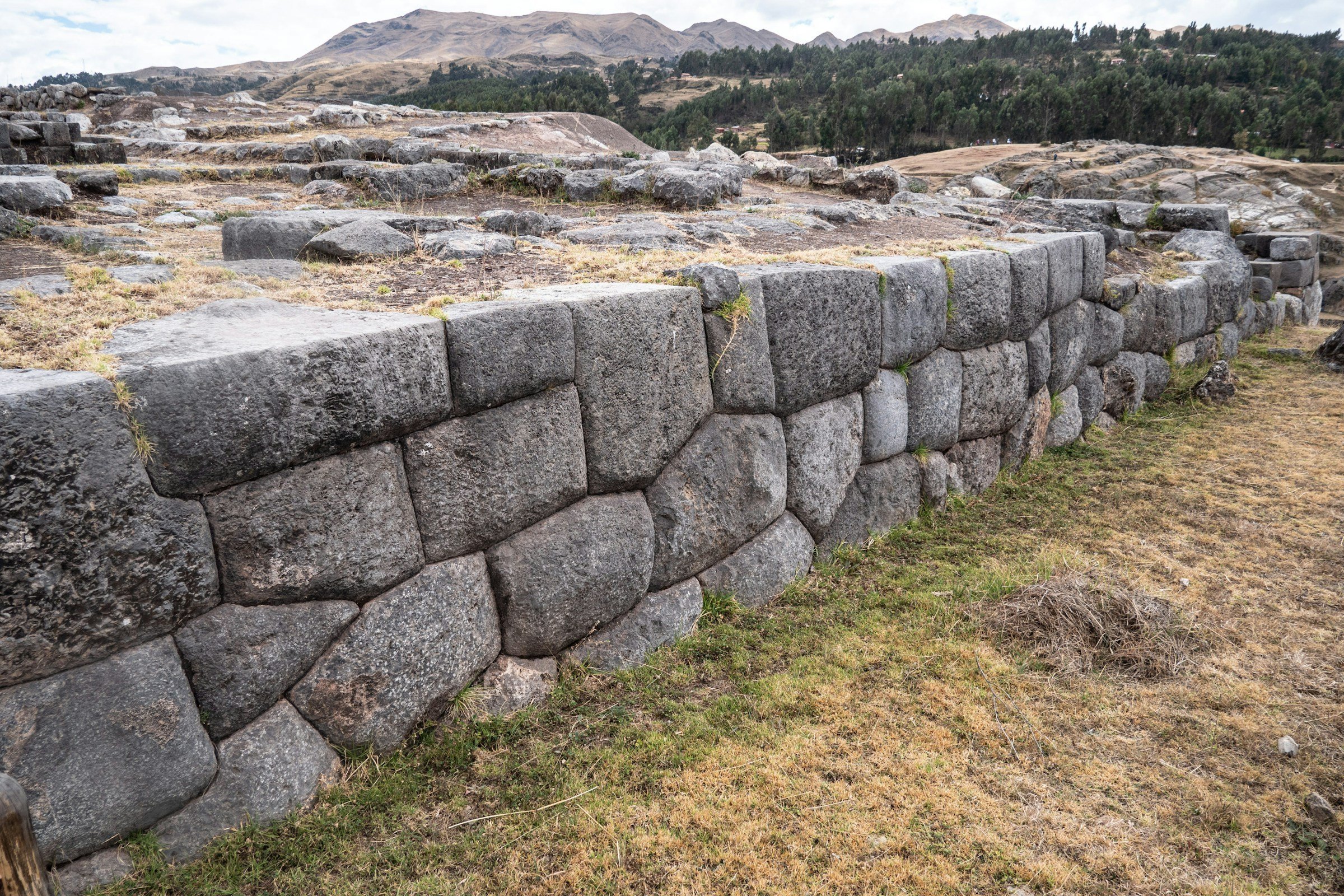
The Spanish wrote that Sacsayhuaman was a military fortress because that’s what they would have built on a hilltop overlooking a capital city. The Inca didn’t think in those terms. This was probably a ceremonial center, maybe a royal complex. What it definitely was: a demonstration of engineering that made the Spanish nervous.
Some of the stones here weigh over 120 tons. They’re fitted together with the same precision as everything else the Inca built, except these blocks are so massive you have to walk around them to understand the scale. The Spanish tried to dismantle Sacsayhuaman to build churches in the city below. They gave up because moving the stones was impossible even with European technology.
Entry is included in the Cusco Tourist Ticket (130 soles or USD 35 for ten sites, worth buying). Go at sunrise if you want photos without crowds. By mid-morning the site is packed with tours and people doing yoga poses on sacred stones, which the guards have given up trying to stop.